Want to explore the dark web and looking for a good starting point? Then you’re in the perfect place. You’ll discover not only what dark web search engines are and how they work but also which are the best censored and uncensored dark web search engines — including the latest onion addresses. You’ll also learn more about link directories like The Hidden Wiki and why you should install a cyberprotection solution like Avira Free Security for surfing anywhere online — and not only on the dark web.
What is a dark web search engine?
Dark web search engines are special search services for searching the dark web — the hidden part of the internet that you can’t reach with a regular browser and which conventional search engines like Google don’t index. That’s because they only index websites in the publicly accessible surface web, which you’ll also hear called the clearnet — or normal internet to you and me.
Dark web search engines only index websites in the isolated, invisible part of the internet located just beneath the surface in the deep web. That’s why you’ll sometimes hear them called underground search engines or secret search engines.
That said, they can only search the dark web and not the entire deep web. That’s because most of the content in the deep web isn’t publicly accessible since it’s protected by login pages or other access restrictions. That’s why the term deep web search engine, which is sometimes also used, isn’t entirely accurate — or, if it is used, it refers to different types of specialized search services that search deep web content such as academic databases, libraries, or archives.
The term “dark web” covers various separate overlay networks that exist independently of each other that you can only access using specific software. The biggest and most well-known network is the Tor network, which you can access using the Tor Browser. If dark web search engines are specifically designed for the Tor network, they’re also called Tor search engines or onion search engines. That’s because the websites in that network are called onion services (formerly hidden services) and their URLs end in “.onion”.
You’ll find many different search engines in the Tor network, but they’re not all the same. That’s because they differ significantly in terms of functionality, index size, ranking and filtering mechanisms, and how they handle data protection and privacy. Some search engines in the dark web use very basic methods to organize their result, showing everything they find with little or no filtering. Others, however, use advanced ranking algorithms, AI-supported analysis, real-time status checks, and threat detection or advanced filters to block illegal and malicious content — at least that’s what they claim, but in most cases it’s impossible to verify this.
Whereas some dark web search engines are very privacy-oriented and don’t use tracking methods, others don’t provide any further information on what they do — and some generally reveal little about themselves, making it difficult to assess and evaluate them.
The way they handle ads also varies considerably. Some dark web search engines are teeming with banners and sponsored links, while others use them more sparingly or not at all.
How do dark web search engines work?
Tor search engines work in a similar way to conventional search engines. They typically use something called crawlers to search websites in the Tor network and index their content — provided that content is publicly accessible and access restrictions like robots.text, logins, or CAPTCHAs prevent indexing. Some onion services intentionally block indexing to remain secret and exclusive.
Since there is no central link structure or domain name system (DNS) in the Tor network, these crawlers can only capture a small portion of the services that actually exist. Some search engine operators therefore curate their indexes partly manually. Many operators of .onion sites actively submit their sites to search engines so that they can be found. Some search engines even offer a special “Add link” feature for this purpose.
Like clearnet search engines, dark web search engines store the indexed content in a database, which users can search through via a search interface. However, because the dark web is anonymous, highly unstable, and changes frequently, indexing is technically more difficult and often less comprehensive than on the regular internet. Since dark web sites sometimes go offline temporarily, disappear forever, change their address, or are accessible through multiple addresses (called mirrors), the quality of search results is usually much worse and users frequently encounter dead links. On top of that, some dark web search engines only have relatively small and incomplete indexes, leading to fewer and less relevant results.
Uncensored search engines versus alternative search engines
Whereas regular search engines filter out various types of content such as illegal offers, copyright infringements, and malicious websites, many dark web search engines don’t use blocklists and content filters or only block certain types of content such as child pornography. These dark web search engines are also referred to as uncensored, unrestricted, or unfiltered search engines.
However, this term is sometimes mistakenly used for alternative clearnet search engines such as DuckDuckGo, StartPage, Qwant, MetaGer, Searx, and Brave Search. In fact, just like Google and other mainstream search engines, they exclude illegal, malicious, and problematic content from their search results, so they are by no means uncensored.
They do, though, use different filtering and ranking algorithms and place a stronger focus on privacy and data protection, which is why they’re also referred to as private or anonymous search engines. They store far less personal data and largely avoid using tracking methods — giving more neutral search results that aren’t personalized based on your browsing behavior, location, or user profile.
The best dark web search engines in 2026
DuckDuckGo is the Tor Browser’s default search engine, but it can only search the clearnet — even though this is often misunderstood. Even if you turn on the “Onionize” feature and the browser switches you to DuckDuckGo’s Onion page, your search results still come from the clearnet. Because the Tor Browser encrypts data multiple times during transmission and hides your IP address, you can visit clearnet sites securely and anonymously.
Some well-known online services — like BBC News, ProtonMail, and Facebook — also offer both a clearnet and an onion website. When you visit these pages via the Tor network, some of these clearnet pages display a purple “.onion available” icon (called the Onion-Location header) in the upper right corner, so you can switch straight to the onion version. When you switch to an onion version of a website, your traffic stays completely inside the Tor network and your connection doesn’t use an exit node to the clearnet.
To visit a dark web website, enter the onion address into the address bar of the Tor browser or use one of the following currently active Tor search engines and search for specific onion services.
It’s worth noting that even though some dark web search engines filter out certain content such as abuse material, filtering doesn’t always work perfectly. As such, there’s no guarantee that you’ll not encounter disturbing, illegal, or malicious content. So always stay on your guard and don’t click links or banners without careful consideration.
Torch
Torch or Tor Search is one of the oldest and best-known dark web search engines. The Torch team has set itself the goal of indexing every publicly accessible Tor website — which they currently put at over 100,000 onion websites and over 4 million webpages.
Torch’s search results are not censored because the Torch team’s philosophy is that “People have the right to do anything they want and live with the consequences. Torch should not decide what people do with their lives even if it’s morally wrong. We’re a search engine; not your conscience.”
Onion address: http://torchdeedp3i2jigzjdmfpn5ttjhthh5wbmda2rr3jvqjg5p77c54dqd.onion/
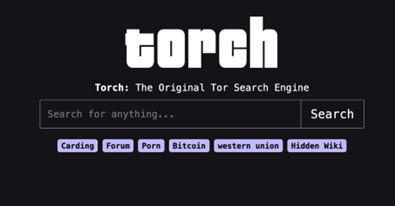
You’ll find another search engine called Torch or Torch Search Engine here: http://rczml4qtvhfxlwck4jlmky6aa4a7vdbqy3a3ndowv25z5n3wxqweqfyd.onion/. This is currently indexing 860,571 onion pages and serving 80,000 search queries daily. It’s difficult to say which is the original and which is a successor or a mimic.
TorDex
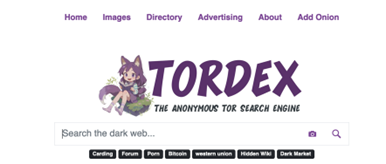
TorDex (also known as Tor Index) is one of the largest uncensored search engines on the dark web. It says it processes 350,000 search queries daily in its network. TorDex also wants to leave it up to its users to decide what they search for — or not. Besides the search function, the page also contains a categorized links catalog.
In addition to TorDex, the provider also offers the dark web search engines Torch and OurRealm. These use the same search index as TorDex, but have different user interfaces. They also offer IMGDex — a dedicated search engine for images on the dark web, which they like to think of as the Google Images of Tor.
Onion address: http://tordexu73joywapk2txdr54jed4imqledpcvcuf75qsas2gwdgksvnyd.onion/
Onion Search Engine
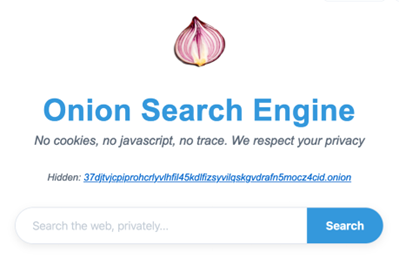
The Onion Search Engine prioritizes the privacy and anonymity of its users and therefore adheres to a strict no-logs policy. The ad-free and uncensored dark web search engine claims to allow users to explore the dark web safely and privately — without tracking, cookies, and JavaScript. The search engine is also available as an Android app and a Firefox browser extension.
Onion Search Engine LLC offers not only a search engine but also an anonymous and secure email service called Onion Mail.
Clearnet address: https://onionsearchengine.com
Onion address: http://37djtvjcpiprohcrlyvlhfil45kdlfizsyvilqskgvdrafn5mocz4cid.onion
Haystak
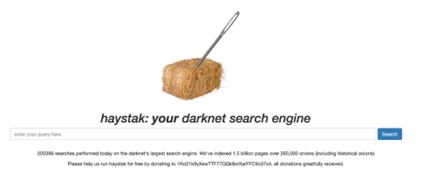
Haystak is a popular dark web search engine. According to the provider, you can find all reachable websites there and it has indexed 1.5 billion webpages and over 260,000 onion websites (including historical ones). The team of privacy activists campaigns for a free internet without surveillance. While it is generally opposed to censorship, it makes an exception for immoral or illegal content such as child abuse and human trafficking.
To cover its costs, Haystak offers advanced search, access, and notification features as premium services — including access to a database containing Bitcoins, email addresses, Visa card numbers, etc.
Currently, at least the free search doesn’t seem to be working, even though the site is (still) accessible.
Onion address: http://haystak5njsmn2hqkewecpaxetahtwhsbsa64jom2k22z5afxhnpxfid.onion/
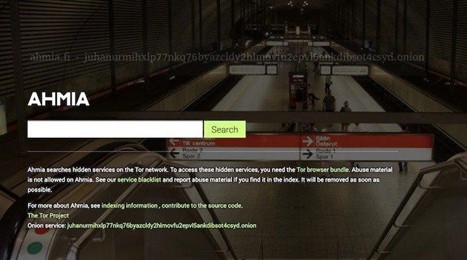
Ahmia
Ahmia is a well-known, non-commercial, open-source search engine from Finland that advocates for greater transparency and security on the dark web. It also publishes its source code on GitHub. It offers a keyword-based search feature, only indexes publicly accessible onion services, and is ad-free. Ahmia does not store any personal data as defined by the GDPR, does not create user profiles, and doesn’t track users.
The dark web search engine blocks websites containing child sexual abuse material (CSAM) and provides the hashed blocklist on its website. When users search for such content, Ahmia offers links to self-help programs or research surveys instead of search results.
Clearnet address: https://ahmia.fi/
Onion address: http://juhanurmihxlp77nkq76byazcldy2hlmovfu2epvl5ankdibsot4csyd.onion/
Excavator
Excavator is a dark web search engine that’s anonymity focused and designed to be easy to use. Its webpage only displays the following: “No javascript. Safe Search. We don’t track you.”
Onion address: http://2fd6cemt4gmccflhm6imvdfvli3nf7zn6rfrwpsy7uhxrgbypvwf5fad.onion/
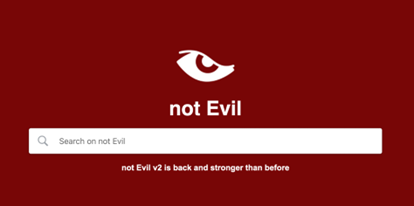
not Evil
Like Excavator, the ad-free dark web search engine not Evil remains similarly secretive, not revealing anything other than: “not Evil v2 is back and stronger than before”.
not Evil offers report links in its search results, allowing users to report websites, and appears to have a fairly comprehensive index.
At a different onion address, NotEvil (— The Highway To Hell) is more talkative, saying that the dark web search engine is based on the Hell LLM (large language model) and that “not a single byte” is censored in the search results. According to Not Evil, search queries are not tracked, no IP addresses are stored, and no personalized profiles are created.
Whether or how the two sites are connected remains the secret of Beelzebot — that’s what the operator of the NotEvil site calls himself: “I am Beelzebot, servant of the dark one!” Although the page is also red, it differs from the other one in other respects, including in terms of ads.
Onion address: http://notevilcdlnwra7bbxio2rnrrpxyecw6dvodqeelvujf66ja3ssbdcid.onion/ (not Evil)
http://notevil2ebbr5xjww6nryjta7bycbriyi2vh7an3wcuovlznvobykmad.onion/ (NotEvil)
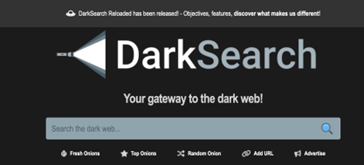
DarkSearch
DarkSearch is a cutting-edge dark web search engine based on DarkBERT — a BERT-like, pre-trained AI language model specifically designed for the dark web to better understand search queries and deliver more relevant results.
The system filters out fraudulent content as well as pages containing child pornography (CP) and child sexual abuse material (CSAM). Furthermore, the provider states in the dark web forum Dread that the search engine has real-time threat monitoring to quickly and effectively detect potential security threats. According to the DarkSearch team, the index is also updated continuously and the public dark web is re-crawled every six hours. In addition, links are verified in real time, and active and trusted sources are prioritized.
The homepage allows you to access Fresh Onions, Top Onions, and Random Onions. Further information about each hit (such as signed URLs, PGP keys, and associated dark web profiles) is given in the search results, which you can access by clicking the info icon. Pages can also be reported by clicking the flag icon.
Onion address: http://darkzqtmbdeauwq5mzcmgeeuhet42fhfjj4p5wbak3ofx2yqgecoeqyd.onion/
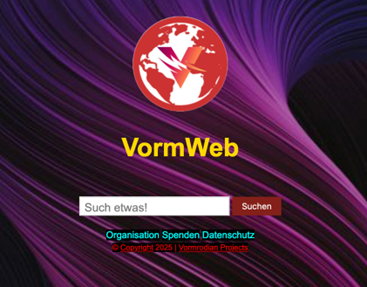
VormWeb
This small but excellent dark web search engine comes from Germany. You can set the engine’s interface to English or German — although it’s best to enter English search terms. The VormWeb project focuses on indexing legitimate news, email, chat, marketplace, forum, community, and software services, placing great emphasis on the quality of its search results. These are graded into three security levels, with each given a corresponding badge: Verified (by checking the PGP signature), Warning (only partially verified), and Risky (mostly spam). VormWeb is completely free of JavaScript, ads, and trackers. It also doesn’t harvest any private data to identify individuals.
Websites containing child sexual abuse material or content depicting violence against women are not indexed, results for such search terms are blocked, and crawling is heavily filtered. Instead, a warning appears with links to help services. Otherwise, the provider is generally opposed to censorship and doesn’t use a ranking system to manipulate search results.
Clearnet address: https://vormweb.de/
Onion address: http://volkancfgpi4c7ghph6id2t7vcntenuly66qjt6oedwtjmyj4tkk5oqd.onion/
Torgol
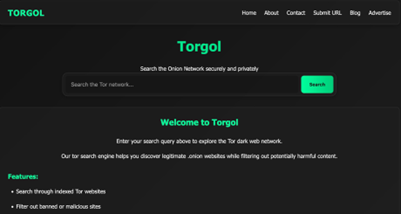
According to the provider, the dark web search engine Torgol was developed to make legitimate onion websites easier to find, to filter out banned and malicious content, and to provide a privacy-focused search option. That’s why it doesn’t store your research requests or browsing history, and keeps JavaScript use to an absolute minimum
Torgol uses advanced ranking algorithms which prioritize content by relevance, quality, and currentness; a powerful search infrastructure that’s optimized for the Tor network; and precise request processing with typing error tolerance.
Clearnet address: https://torgol.com/
Onion address: http://torgolnpgaztxr7mvjdz2idhq4vwp2sndydirjkcqwuwqe6u7tjoipqd.onion/
DarknetSearch
The team behind DarknetSearch does not tolerate any form of violence, exploitation, and inhumanity. That’s why it blocks websites promoting terrorism and extremism, contract killing, the exploitation of children, animal cruelty, dangerous weapons, explosives, and hazardous chemicals. It also follows a privacy-first approach and doesn’t use trackers.
According to the provider, DarknetSearch also offers advanced, real-time scam and threat detection, AI-based content analysis, maximum index accuracy, as well as ongoing retraining and fast search results thanks to distributed caching. The website also provides tips and info on exploring the dark web.
Onion address: http://darknetsrvqlssdnli6mgoqxud4krgu3hqm62d7whu3gl6xj22fkyaid.onion/
ONION.live
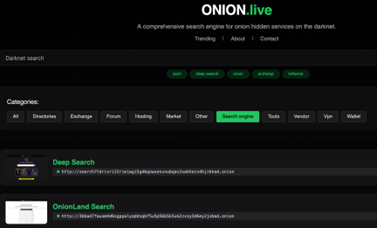
ONION.live is run as a non-profit community project. It’s a mix of dark web search engine and links catalog of verified onion links. The provider says that the search results’ availability status is verified in real time. The search engine uses proprietary crawling technology that can bypass many CAPTCHAs and login pages, and also doesn’t use JavaScript. In addition, it neither harvests private data nor stores your search history.
It also enforces PGP (Pretty Good Privacy) verification for websites that implement the OMG (Onion Mirror Guidelines) standard, helping prevent phishing links or fake mirror sites from being listed. The OMG standard is a formal security and verification process for websites in the Tor network.
Clearnet address: https://onion.live/
Other dark web search engines
OnionLand Search: https://onionlandsearchengine.net/ (clearnet)
http://3bbad7fauom4d6sgppalyqddsqbf5u5p56b5k5uk2zxsy3d6ey2jobad.onion/
DeepSearch: http://search7tdrcvri22rieiwgi5g46qnwsesvnubqav2xakhezv4hjzkkad.onion/
Our Realm: http://orealmvxooetglfeguv2vp65a3rig2baq2ljc7jxxs4hsqsrcemkxcad.onion/
TorLanD: http://torlgu6zhhtwe73fdu76uiswgnkfvukqfujofxjfo7vzoht2rndyhxyd.onion/
Tor Search: https://torsearch.com/ (Clearnet)
TorSearch: http://tz75oxijdfwnobeh3sn6vfethrz4zqdasylrmp7euntqivbsaubojmyd.onion/index.php
Tor 66: http://tor66sewebgixwhcqfnp5inzp5x5uohhdy3kvtnyfxc2e5mxiuh34iid.onion/
FindTor: http://findtorroveq5wdnipkaojfpqulxnkhblymc7aramjzajcvpptd4rjqd.onion/
Onix: http://onixxxxxbddwewhvktd5zf5s7arpkmkv3m7n4zorjxvfxl7zowhvseid.onion/
Amnesia: http://amnesia7u5odx5xbwtpnqk3edybgud5bmiagu75bnqx2crntw5kry7ad.onion/
Bobby Search: http://bobby64o755x3gsuznts6hf6agxqjcz5bop6hs7ejorekbm7omes34ad.onion/
Navigator: http://3gez2dfuf4y7buo33hq2xkhjiy6jfxfmszmipjbvfwo4jz6gk4qi4pid.onion/
Anubis: http://anubisrmxruiuxyw4ld2cjcjqeydce66q3zje2wyhg4wmdirjdbg3lqd.onion/
Link directories and catalogs
Besides dark web search engines, there are countless categorized link directories of varying sizes. These are just old-school lists of links that don’t have a search engine function. They contain links that haven’t always been verified and are not regularly checked and updated. That’s why these dark web directories can also contain harmful links that don’t work or which might take you to malicious websites.
Besides the usual categories such as marketplaces, forums, and email providers, most directories (like Torlinks) also include a scam category, listing known fake onion services.
Torlinks: http://5n4qdkw2wavc55peppyrelmb2rgsx7ohcb2tkxhub2gyfurxulfyd3id.onion/
A small number of dark web directories also provide the current status of websites; however, they’re not something that’s totally reliable.
- fail: https://dark.fail/ (clearnet) http://darkfailenbsdla5mal2mxn2uz66od5vtzd5qozslagrfzachha3f3id.onion/
- Deepweb: https://deepweb.net/ (clearnet) http://deepweb4wt3m4dhutpxpe7d7wxdftfdf4hhag4sizgon6th5lcefloid.onion/
- OnionLinkHub: https://www.onionlinkhub.com/links/ (clearnet)
http://xs53eiwffecnhhmblhiry6ijiugx2h57izqxc37c5rxhcl4wgq4ewnqd.onion/links/
Whereas Dark.fail specializes in checking the availability and verifying the most well-known onion services, Deepweb and OnionLinkHub focus on providing curated catalogs with their own search function as well as other offerings and information on the dark web and Tor.
Even directories of directories exist. Just Onion, for instance, is a directory aggregator showing only onion directories (webpages with a list of onion services). The helpful search function allows you to search for directories by topic.
Just Onion: http://justdirs5iebdkegiwbp3k6vwgwyr5mce7pztld23hlluy22ox4r3iad.onion
https://justonion.directory/ (clearnet)
The Hidden Wiki
The Hidden Wiki is one of the oldest and most well-known link directories on the dark web. It lists onion addresses covering a wide range of categories, making it a useful starting point for many dark web newbies. Although there isn’t a central, official version —only many different Hidden Wikis maintained by various providers — there is a version that’s regarded as the original.
Unlike Wikipedia on the clearnet, onion versions don’t contain extensive encyclopedic articles. That said, in addition to the link lists, they sometimes include information, tips, and security advice on using the Tor network and the services available there.
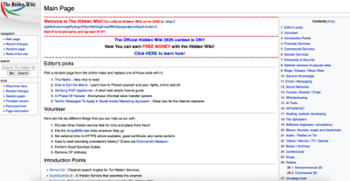
Onion address: http://zqktlwiuavvvqqt4ybvgvi7tyo4hjl5xgfuvpdf6otjiycgwqbym2qad.onion/wiki/index.php/Main_Page
Other link directories and wikis
TorLinks: http://torlinksge6enmcyyuxjpjkoouw4oorgdgeo7ftnq3zodj7g2zxi3kyd.onion/
FreshOnions: http://3mcm3cathoi5eahjeq7e5tgessfktszioxyf4rnx2ug7ab3ilzvgwfyd.onion/
OnionDir: http://oniodtu6xudkiblcijrwwkduu2tdle3rav7nlszrjhrxpjtkg4brmgqd.onion/
OnionLinks: http://jaz45aabn5vkemy4jkg4mi4syheisqn2wn2n4fsuitpccdackjwxplad.onion/
Dark Web Link: http://dwltorbltw3tdjskxn23j2mwz2f4q25j4ninl5bdvttiy4xb6cqzikid.onion/
Darknet Home: http://catalogpwwlccc5nyp3m3xng6pdx3rdcknul57x6raxwf4enpw3nymqd.onion/
Tor Hidden Wiki: http://darkwebp7lyr44rpgqdtevalty2pk5oqmc6m2cnicnix7itelt3lp3id.onion/
Hidden Wiki: http://torwikijwqskahohtn35pyfde2uqmgrxgr2fru4mn4rer5muj445dxyd.onion/
The Hidden Wiki: http://torlink2uegl22vwzop42t4eipy2r2eksk67kvan4vx4r6h77t3cejad.onion/
Wiki Page: http://uquroyobsaquslaunwkz6bmc3wutpzvwe7mv62xeq64645a57bugnsyd.onion/
DarkLib: http://darklibi4o7xihxcqq4dpk2vnrtkk7twm3gknnuyq5dcthluig6imvad.onion/
Are dark web search engines illegal?
In principal, dark web search engines are not illegal since they merely index webpages and make them discoverable — and they’re not responsible for their content either. However, they can lead to onion services that host illegal material — especially if you use completely uncensored search engines which don’t block child sexual abuse material or content depicting extreme violence. But even if they do implement filtering, you can’t rely on it completely. Because the dark web lacks regulation and oversight and therefore hosts many illegal offerings, it’s not unlikely that you’ll encounter them while browsing. So, be even more cautious than you are on the normal internet.
Is it safe to use dark web search engines?
The security of dark web search engines depends heavily on the search engine you use. Although some attempt to filter out malicious websites (which doesn’t always work 100%), most show completely unfiltered results. These can include links to fake shops and other fraudulent webpages. Phishing sites that mimic well-known onion services and target sensitive user data are, unfortunately, also fairly widespread on the dark web. You also need to take care when it comes to banners and downloads, as these can be infected with malware.
Tips to help you stay safe when surfing the dark web
Although it’s not illegal to surf the dark web, you do so at your own risk. That’s why it’s all the more important to follow these security tips.
- Only use the official Tor browser and keep it up to date.
- Turn on the protection settings in the browser under Privacy & Security.
- Look out for the different onion icons in the browser’s address bar, which indicate the security status of the webpage you’re on.
- Use a dark web search engine that blocks malicious and illegal content.
- It’s best to never buy anything on the dark web, and never reveal any personal information or sensitive data.
- Only visit verified and legitimate onion services, and never click banners or download files or software.
Top tip: Use an all-in-one cybersecurity solution like Avira Free Security to significantly strengthen your protection when surfing — and not only on the dark web. You can add an additional layer of protection with the built-in VPN solution, which encrypts everything you send and receive online — even outside the Tor network — and masks your IP address. The powerful antivirus protection also helps you block malware and other online threats.
Tor, Tor browser, and Onion are registered trademarks of The Tor Project, Inc.
Google is a registered trademark of Google LLC.